Tear Them All: Robot Fighting
Freeplay IncAction
4.5938.00 Reviews
- Version
- 1.44.6
- Installs
- 10.00M
- Age Rating
- Teen
Screenshots
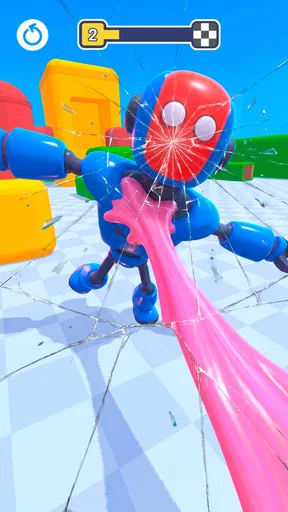
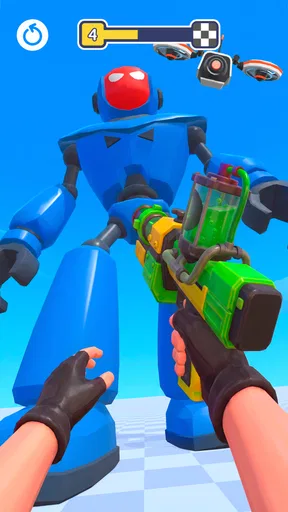
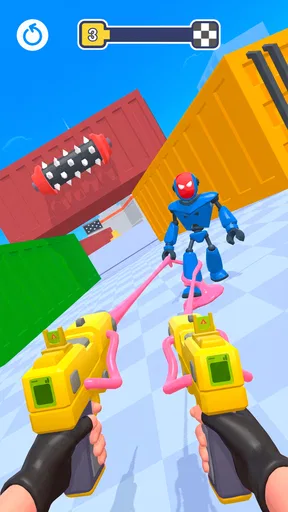
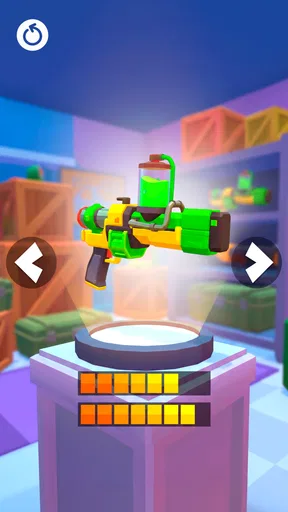
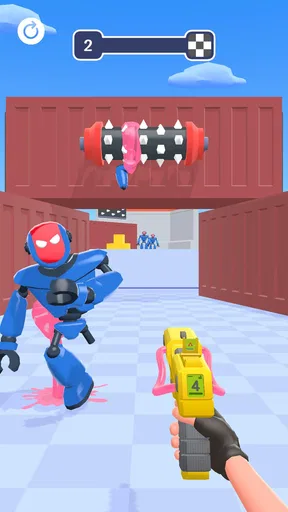
Our Review of Tear Them All: Robot Fighting
 Analysis by Appyee
My first few minutes with Tear Them All: Robot Fighting were defined by a simple promise: step into a robot battle, move quickly, and keep destroying machines before the pressure catches up with me. That direct approach is the game’s biggest strength. It is an action game from Freeplay Inc, available for free, and its Teen content rating gives a fair warning that the combat is aimed at players who are comfortable with a more aggressive tone than a family-friendly cartoon brawler.
What surprised me was how much the presentation depends on momentum. This is not the kind of game I open when I want a long story, careful exploration, or a slow tactical campaign. I play it when I want an immediate burst of mechanical combat and a clear objective. The experience is easy to understand, but getting satisfying results depends on how well I read the battlefield, choose my timing, and avoid treating every encounter as a mindless rush.
The game has built a sizeable audience, with an average rating of 4.5 from roughly 27 thousand ratings and more than 10 million installs. Those figures do not make it automatically perfect, but they do match my impression that the central loop is easy to pick up. The important question is whether that loop suits your taste. If you enjoy compact action sessions built around repeated robot encounters, there is a lot here to like. If you need deep narrative progression or a quiet, methodical pace, the appeal is much narrower.
How the robot world creates its mood
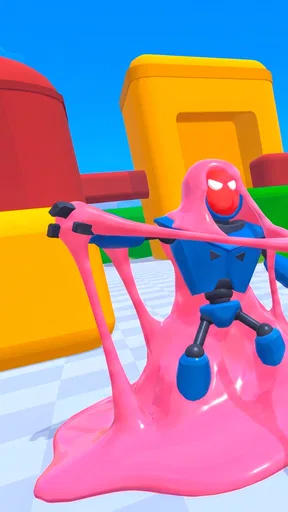
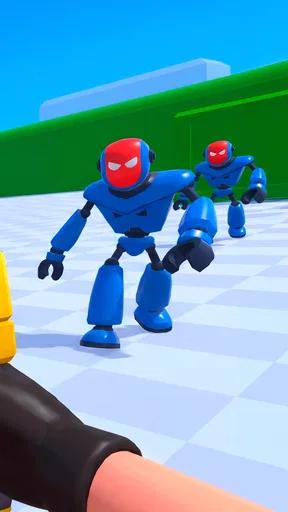
The setting communicates itself through machines rather than lengthy exposition. That choice keeps the focus on the physical threat in front of me: hostile robots, crowded combat space, and the constant need to keep moving. The visual language is practical and readable. I can understand the basic relationship between my character and the enemy machines quickly, which matters in a game where hesitation is more dangerous than confusion.
I also like that the robotic theme gives the action a consistent identity. A human-versus-human setting could make similar encounters feel ordinary, while the machines add a harder, more industrial edge. Metal bodies, impact-focused attacks, and the idea of dismantling war machines make each confrontation feel connected to the same world. The atmosphere is not built around subtle realism; it is built around the satisfying contrast between a compact character and a battlefield full of oversized mechanical danger.
That clarity has a trade-off. The world is most effective as a backdrop for action, not as a place I explore for its own sake. I would not choose this game expecting a rich science-fiction setting with extensive lore, character conversations, or a carefully developed society. Its world language is closer to an action arena: the environment exists to frame the next threat and make the destruction readable.
For me, that is not a flaw as long as I approach it correctly. The game works best when I accept that the setting is there to strengthen the combat mood. I am not waiting for a complicated plot to explain every machine. I am watching the screen for danger, looking for a safe route through the fight, and enjoying the visual rhythm of robots entering the action and being taken apart.
Art direction that supports quick decisions
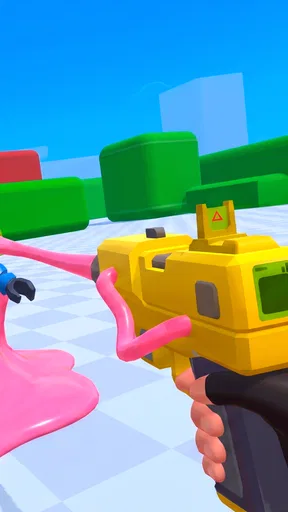
The art direction earns its place by helping me make decisions under pressure. In a crowded robot fight, decorative detail can become a problem if it hides enemies or makes attacks difficult to read. Here, the useful visual information is the machinery itself and the movement around it. The game’s strongest visual moments are the ones where I can immediately tell what is threatening me, what I can attack, and where I have room to reposition.
This is also why the game feels more approachable than a complicated action title with several overlapping systems. I do not need to memorize a large fictional universe before I can enjoy a session. The visual theme tells me what kind of danger to expect, while the straightforward objective keeps my attention on the immediate encounter.
One practical tip is to treat the background as part of the battlefield, not just decoration. When several war machines are active, I find it safer to glance at the available space before committing to an attack. A visually satisfying hit is not always the best move if it leaves me surrounded. The game rewards players who use the art’s readability to plan a route, rather than simply chasing the nearest target.
Sound, impact, and the rhythm of a session
The sound design matters because robot combat needs weight. Mechanical enemies should not feel like silent icons sliding across a screen. The audio helps sell the difference between movement, contact, and destruction, giving the action a stronger sense of consequence. Even when I am focused on survival, the sound contributes to the feeling that every encounter is a clash between machines rather than a collection of abstract health bars.
I would describe the overall audio mood as functional and energetic rather than cinematic. It supports the action without trying to turn the game into a dramatic story. That fits the structure well. Since the game gets to its battles quickly, the sound has a short window to establish tension. It does that by reinforcing the pressure of incoming enemies and the release that comes with clearing space.
The rhythm is especially important during short play sessions. I can imagine opening the game while waiting for transport, taking a break between tasks, or looking for something more active than a puzzle but less demanding than a long console-style campaign. The immediate combat makes that possible. I do not need to reserve a large uninterrupted block of time to understand what I am doing.
At the same time, repeated action can become tiring if I expect constant novelty. The same basic emotional cycle returns: enter danger, attack, reposition, survive, and prepare for the next clash. I enjoy that cycle in bursts, but I would not recommend forcing long sessions if the repetition starts to feel like work. The pacing is strongest when I let each session remain focused rather than expecting it to provide an endless stream of new ideas.
A useful habit is to play with enough attention to hear changes in the fight, not merely to watch the screen. Sound can support my awareness when several machines compete for visual space. I still need to verify what I see, but audio cues make the battle feel less flat and help maintain the sense of urgency that the robot setting depends on.
Where the mood helps and where it falls short
The coherent mood is one of the game’s better achievements. The robot theme, destructive objective, action-focused visuals, and impact-oriented sound all point in the same direction. I never feel that the presentation is asking me to play a completely different game from the one represented on screen. It wants me to feel pressured, aggressive, and mobile, and the presentation generally supports that.
The limitation is that mood alone cannot replace variety. A strong mechanical atmosphere can make the first sessions memorable, but long-term interest still depends on whether the encounters continue to test me in meaningful ways. Players who need a broad range of enemy behaviors, elaborate environments, or a strong narrative arc may eventually find the presentation too focused. I see this as an intentionally narrow experience rather than a failed attempt at a larger one.
How the mechanics fit the presentation
The mechanics and the presentation work together because the game does not bury its main idea. I am here to fight robots, and the action begins from that premise rather than making me pass through a complicated setup. The controls and objectives are approachable enough for a newcomer, but the pressure of multiple machines means that simple inputs can still produce difficult decisions.
My main lesson was not to confuse speed with recklessness. The game’s energetic mood can tempt me to attack immediately, yet a better result often comes from creating a little space first. I look for the enemy that is about to limit my movement, deal with the most disruptive threat, and only then pursue the target that is easiest to reach. That priority system is more useful than simply choosing whichever robot is closest.
This is one of the less obvious strengths of the game: its accessible surface can hide a modest layer of battlefield management. I am not managing a complex inventory or building a detailed character sheet, but I am still deciding when to commit, when to retreat, and whether clearing one side of the fight is safer than chasing a damaged machine across the screen.
Another practical approach is to use the opening moments of an encounter as information gathering. Instead of spending every early second attacking, I watch how the machines approach and identify where the fight is likely to become crowded. That small pause helps me avoid being trapped by my own momentum. It also makes the combat feel more deliberate without slowing the game down.
For players coming from other action games, the comparison is useful. A traditional arcade brawler may offer more emphasis on memorizing combos and controlling a fixed group of enemies. A deeper action role-playing game may provide richer progression, equipment choices, and a stronger story. Tear Them All sits closer to the immediate side of the spectrum: it is easier to enter, quicker to understand, and more focused on the sensation of surviving robot encounters than on building a large personal saga.
That makes it a good alternative when I want action without a major commitment. It is less suitable when I want a game that rewards long-term planning through a complex build. I would also look elsewhere if my priority were competitive multiplayer, a substantial campaign narrative, or a slow tactical system. The appeal here is concentrated in direct combat and the mood surrounding it.
Free access and the cost of staying engaged
The game is free to download, which lowers the barrier to trying it. That matters for an action title with a focused concept: I can test the combat for myself instead of deciding from screenshots whether the rhythm suits me. There are in-app purchases priced from $2.99 to $5.99 per item, so I would approach spending carefully and first decide whether the basic loop is enjoyable without treating purchases as part of the entry requirement.
My advice is to judge the game on its ordinary session-to-session feel before paying for anything. If I am already enjoying the battles and simply want to support the experience or make a particular part more convenient, a purchase may feel reasonable. If I am hoping that spending will transform a repetitive loop into a different kind of game, I would probably be disappointed. Purchases cannot replace the need to enjoy the core robot fights.
The current version is 1.44.6, and the game supports devices running Android 6.0 or later. That makes it accessible to people using older Android hardware, although the practical experience will still depend on the device and how comfortably it handles fast on-screen action. I would leave some storage and battery headroom for any action game, especially if I plan to play away from a charger.
The Teen rating is another useful decision point. I would recommend it to older players who enjoy destructive robot combat, but I would not hand it to a younger child simply because the controls appear easy. The tone is built around fighting and destroying war machines, so parents should consider whether that style of action fits the player they have in mind.
Who will get the most from it
I think the best audience is someone who wants a quick action game with a clear visual identity. If you like opening a game and being in danger almost immediately, the structure is appealing. It also suits players who enjoy improving through better positioning rather than learning a huge collection of systems. Each session gives me a reason to pay closer attention to enemy spacing and my own movement.
A realistic everyday use case would be a short evening break after work. I can play a focused session, enjoy the mechanical impact, and stop before the repetition becomes tiring. It also works for a player who wants something more active than scrolling but does not want to commit to a story-heavy game that demands remembering characters, quests, and plot details.
I would skip it if I need a relaxing experience. The robot setting may look playful in places, but the action asks me to stay alert. I would also skip it if my favorite part of an action game is experimenting with elaborate builds, discovering hidden lore, or completing a long campaign with changing objectives. This game’s identity is much more immediate and concentrated.
Another group that may want to look elsewhere is anyone sensitive to repetitive combat loops. The presentation creates a strong first impression, but its value depends on whether repeated robot battles remain satisfying for you. I recommend treating the free version as a trial of the entire idea, not merely a preview of a larger adventure waiting to become something completely different.
For new players, I suggest three habits. First, keep an escape route in mind before starting an attack. Second, target the machine that threatens your movement, not automatically the one with the lowest apparent resistance. Third, take breaks when the rhythm becomes predictable; returning later can make the impact and tension feel fresh again. These are small adjustments, but they make the straightforward mechanics more rewarding.
My verdict on the atmosphere and the action
Tear Them All: Robot Fighting succeeds because its parts agree with one another. The art presents a world of mechanical danger, the sound gives the clashes weight, and the pacing gets me into the action quickly. None of those elements tries to distract from the central activity. Instead, they create a consistent mood that makes a short robot battle feel purposeful rather than random.
I especially appreciate the balance between accessibility and attention. I can understand the objective without studying a manual, yet I still have reasons to think about spacing, target priority, and timing. That is the kind of depth I want from a compact action game: not an overload of systems, but enough pressure to make better decisions matter.
It is not the right choice for every player. The focused loop may feel repetitive, the free-to-play structure deserves sensible spending, and the Teen-rated combat will not suit every household. Players seeking a large science-fiction story or a highly technical alternative will find stronger options in other parts of the action genre.
For me, though, this is an easy recommendation to a friend who wants direct robot combat with a coherent atmosphere. Freeplay Inc has kept the concept clear, and the result feels best when played in short, attentive sessions. If your ideal mobile action game is fast to start, easy to read, and satisfying when you manage a crowded mechanical fight, this one is worth trying before you decide whether it belongs on your device.
Verdict
Strengths of Tear Them All: Robot Fighting
- Simple controls make the robot battles easy to pick up.
- Short matches suit quick gaming sessions.
- Robot upgrades add a sense of progression.
- Bright visuals make the action easy to follow.
- Offline play is useful when you have no connection.
Limitations of Tear Them All: Robot Fighting
- Gameplay can become repetitive after several battles.
- Upgrade costs may make progress feel slow.
- Enemy variety is limited in some stages.
- Ads can interrupt the flow between matches.
- Later levels may rely heavily on upgraded equipment.
Other Releases by Freeplay Inc
View All
Snake Run Race・3D Running Game
Arcade4.7

Fidget Toys Trading・Pop It 3D
Simulation4.7

Count Masters: Stickman Games
Action4.6

Twerk Race 3d — Fun run game!
Arcade4.2
Similar Picks in This Category
View All
Temple Run 2: Endless Escape
Imangi Studios4.1

PUBG MOBILE
Level Infinite4.3

Free Fire: 9th Anniversary
GARENA INTERNATIONAL I4.4

Talking Tom: Hero Dash Run
Outfit7 Limited4.3

slither.io
Lowtech Studios3.9

Sniper 3D:Gun Shooting Games
Wildlife Studios4.6
Frequently Asked Questions
What is Tear Them All: Robot Fighting?
Tear Them All: Robot Fighting is an action game focused on controlling a powerful robot in fast-paced battles. You face waves of mechanical enemies, use your robot’s weapons and abilities, and try to defeat opponents before they overwhelm you. The game combines simple controls with destructive combat, making it easy to start while still requiring timing and positioning to progress through tougher encounters.
How do you play Tear Them All: Robot Fighting?
Gameplay is built around moving your robot through combat areas and attacking enemies at the right moment. Depending on the situation, you may need to avoid incoming damage, target weaker opponents first, and use special attacks efficiently. The controls are designed for mobile screens, so the basic mechanics are accessible, but later battles can demand quicker reactions and better decisions about when to attack or defend.
Is Tear Them All: Robot Fighting free to download?
Tear Them All: Robot Fighting can generally be downloaded without an upfront purchase, although the exact availability and monetization options may vary between Android and iOS. Like many free mobile games, it may include advertising, optional in-app purchases, or upgrade systems that can speed up progress. It is worth checking the store listing before installing, especially if you want to avoid unexpected purchases.
Does the game require an internet connection?
Whether every feature works offline depends on the current version of Tear Them All: Robot Fighting. Basic gameplay may be available without a constant connection, but advertisements, cloud saves, updates, leaderboards, or other online services can require internet access. If you plan to play while traveling or with limited data, test the game in airplane mode after installation to confirm which functions remain available.
Is Tear Them All: Robot Fighting suitable for children?
The game may be easy for younger players to understand because its controls and objective are straightforward, but it is still centered on robot combat and destruction. Parents should review the age rating, advertising content, privacy information, and any in-app purchase options shown on the relevant app store. Device restrictions can also help prevent accidental purchases or access to unsuitable promotional content.
Play our best games!


